
Lead the pack with the latest in strategic L&D every month— straight to your inbox.
SubscribeYou’re a new hire. You turn up on the first day of the job, unsure what’s in store for you. This can go either one of two ways:
- Either you get the most generic onboarding and training experience ever (which might even cover info you already know), and you get bored, or
- You get tailored learning that targets the specific gaps you need to close to succeed in your new role.
One of those options actively contributes to new hire turnover, by the way. The other one improves employee retention. Research supports this distinction. McKinsey has found that effective onboarding isn’t about completing orientation tasks; it’s about whether people are actually prepared to perform in their role. When onboarding focuses on building the specific capabilities required for the job, new hires reach impact faster and are more likely to stay. Generic onboarding, by contrast, delays readiness and increases the risk of early attrition.
Onboarding with capabilities
So you’re a new hire who receives a capability self-assessment on your first day. The idea of it is to understand your current competency compared to the level of competency you need.
Let’s say you’ve joined a marketing team. Maybe you’re not that good at understanding marketing strategy yet, so mark yourself as “developing”. But your role actually requires you to be “proficient”. Now your manager knows that marketing strategy is an area you’re not so confident in, and might require support in. If your manager also assesses you at the same level, then they’ll know marketing strategy is a development area for you.
This means three things:
- HR has a clear development plan to successfully onboard new hires, including an accurate estimate of ramp time.
- The new employee has an immediate understanding of their responsibilities and performance expectations for their role.
- Managers can instantly see what new hires’ self-assessed strengths and weaknesses are and use that to inform learning plans.
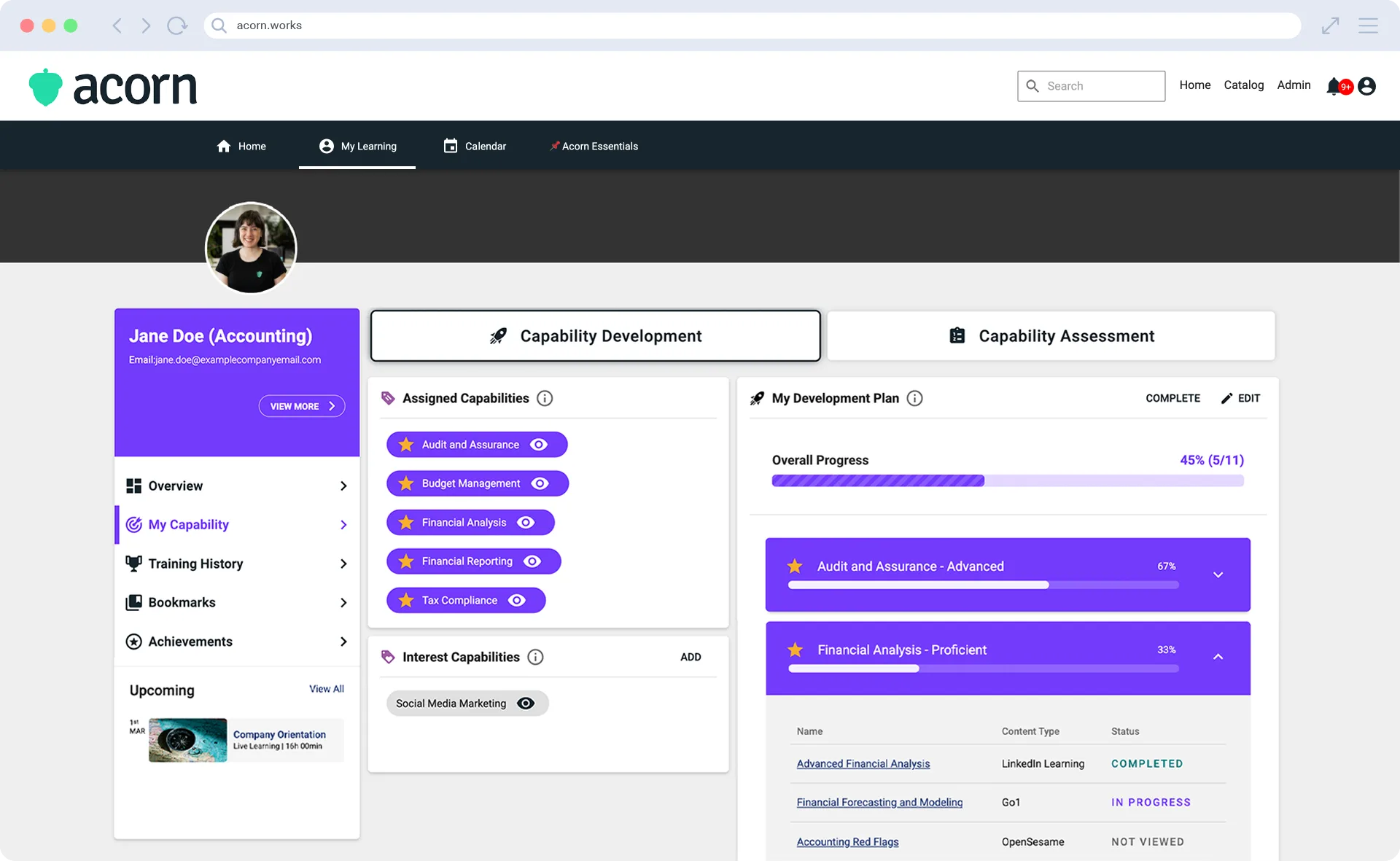
Once a new employee comes to the end of their probation period, you’ll be able to see how effective their training was. Just know that capability-led onboarding doesn’t stop after probation ends. At the end of the period, you’ll run another capability assessment, including a self-assessment and manager assessment (it’s better to run both of these evaluations, because together, they create a more objective overview of how an employee is actually performing).
The data you gather on capabilities, whether they’re from self-assessed or manager-assessed evaluations, provides a basis for performance history going into the regular performance review cycle. This means managers have a more accurate idea of how performance has improved and the ROI of onboarding and training.