
Lead the pack with the latest in strategic L&D every month— straight to your inbox.
SubscribeChances are, you probably associate capabilities with L&D, professional development, and employee training. And when you hear “recruitment” you think of, well, recruitment. The hiring process. In that case, employee training is the thing comes after recruitment happens.
What if it wasn’t like that, though? What if capabilities played a role in recruitment—not as a way of active training and development, but as a blueprint for the right candidate?
We think capabilities can do just that.
Capabilities as job advertisements
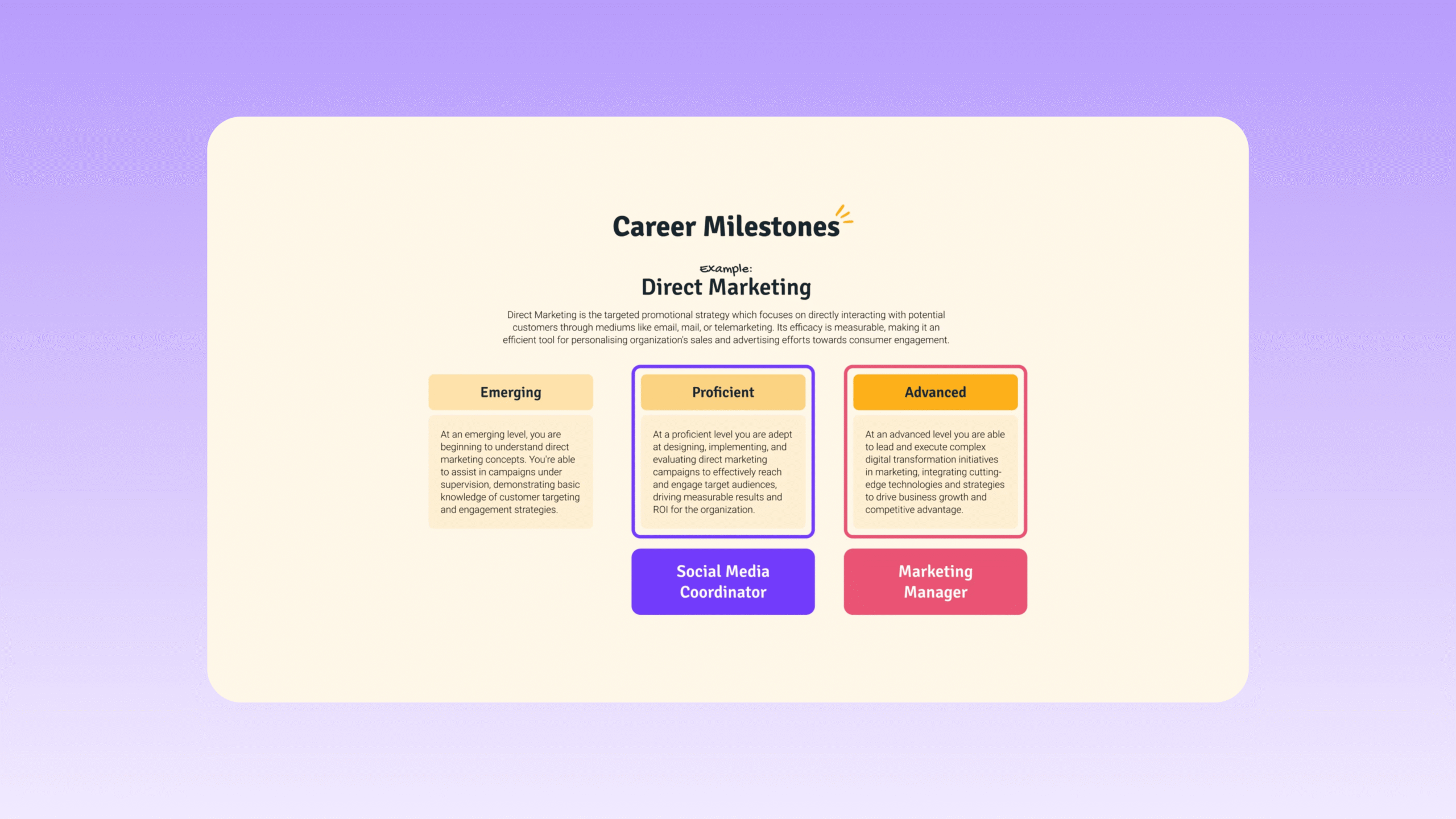
All job roles have a set of capabilities tied to them, as well as a set level of proficiency that each capability is expected to be performed at. Employees within the same team likely have a few capabilities overlapping—they are on the same team working towards the same goal after all. But different roles or levels of seniority within the team have different requirements for how well they’re expected to perform their capabilities. A junior salesperson wouldn’t need to be an expert in sales strategy, for example, but your sales director would.
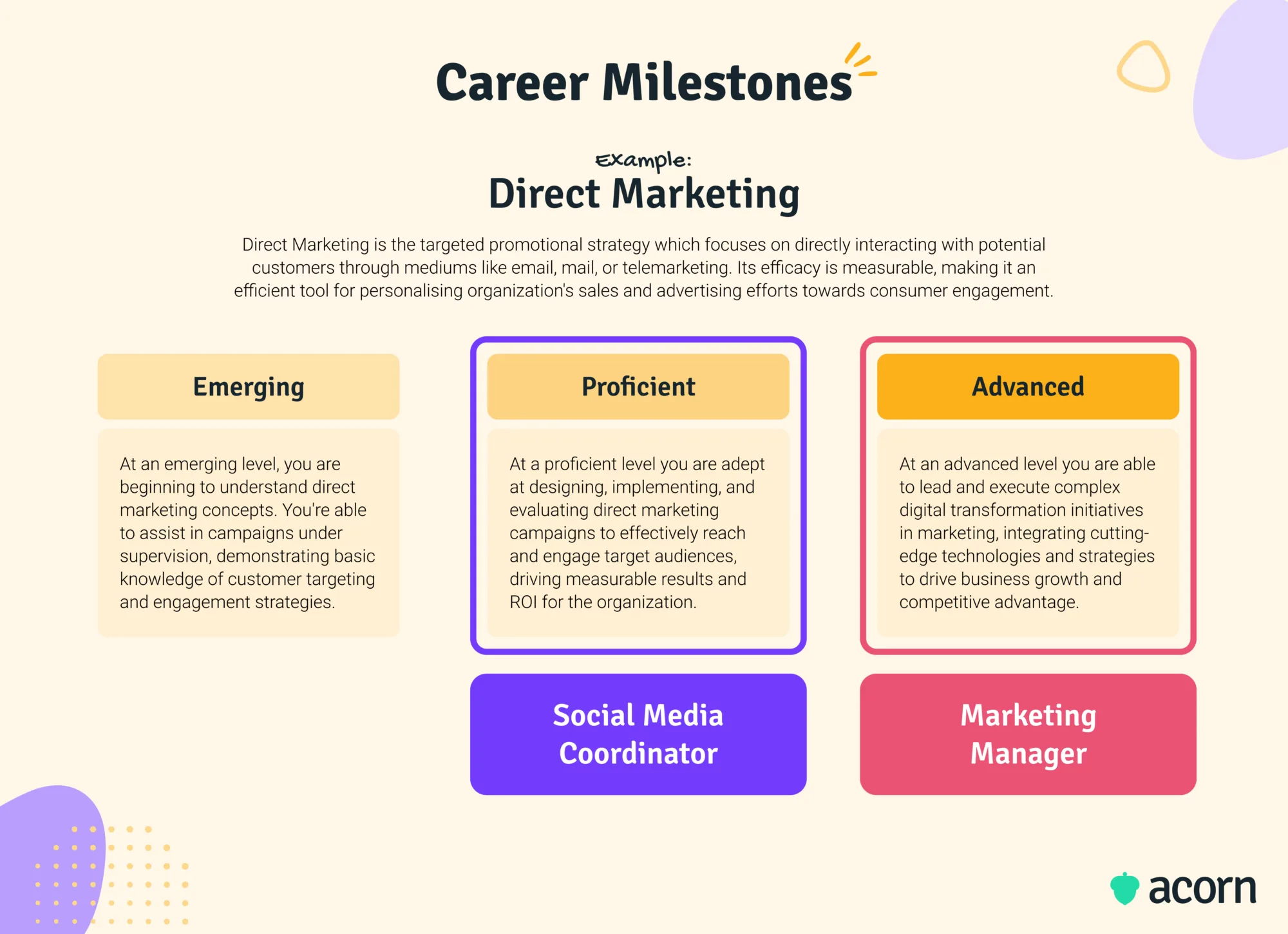
Imagine you take the required capabilities of the job to create a tailored job ad. It gives candidates a clear understanding of the key capabilities, experiences, and responsibilities that are expected of them in the role. But it also means that your company can assess whether candidates have the capabilities (and proficiency levels) they need.
And we’re not saying that you should only consider candidates who match capabilities requirements one-to-one, because a bit of training is to be expected when anyone starts a new job anyway. But we are saying that you can use capabilities to find the candidate who is most qualified for the role, and have an idea of what training to provide off the bat to close capability gaps.
Capabilities for candidate screening
So how do you determine if candidates have the right capabilities or not? You can use the role’s capability set to generate screening questions for candidates to answer. These screening questions aren’t just a matter of asking how many years of experience a candidate has, they’re about determining what a candidate can actually do, with examples.
Once candidates have self-assessed themselves using those screening questions, they can be rated against the role’s required capabilities. It means you end up with a smaller, but more qualified candidate pool, and your hiring managers can spend less time in the interview phase. Adding to that, your candidates have seen the ad and answered the screening questions, so they know exactly what capabilities they’re expected to demonstrate in the role.
Interviewing with capabilities
Your candidate makes it to the interview. Now you need to ask questions based on the capabilities they assessed themselves on in the screening questions. Think along the lines of a case study or practical scenario where they displayed their ability to perform their capabilities to a certain level.
If the candidate is successful, you can use their self-assessment in the interview (i.e., their interview answers) to help set up an effective onboarding process. In the long run, that just means employees get more relevant learning from day one, and are ready to perform their jobs sooner rather than later.